OUCH......

I know we have spoken about the temp guage...mine from the begining has been spot on...I know Im one of few.....supplier quality maybe?

Chris
Mine is pretty good, but the hot days it takes a bit for it to get normalized once you start driving.
 
Mine is definitely off. Usually 8 degrees high on a regular basis. I have used two other cars to test it and they read accurate but my Ram is definitely off.
 
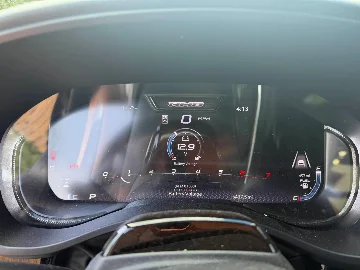
This has to become a TSB. Way too many reports to be one-offs. Mine also suffers from this. On "normal" days, below 70 it reads within a few degrees of actual. Once it hits 70, it becomes progressively worse.

1780935191422.webp
1780935210709.webp


and it makes no difference if it's been sitting, or moving. Took it to the dealer and they "could not reproduce the issue" even though I explained how to reproduce it. Frustrating.
 
I have never had an outside temperature gauge that, in extreme warm weather, was not high after sitting, then came down after driving. All my vehicles, this seems to be standard. They sit on hot pavement or in direct sun and it inflates it.

Maybe someone in these hot conditions could set a regular thermometer right on the hood of the RHO and see what it says? I suspect it will be high also if in direct sun with the heat reflecting off the vehicle.

From AI:

Here’s what’s happening:


1. The sensor is near hot stuff​


Most outside temp sensors are mounted behind the grille, front bumper, or mirror area — somewhere protected from direct wind and road debris. When the car is parked:


  • The engine bay radiates heat
  • Hot pavement radiates heat upward
  • Sun heats the bumper/grille area
  • Air around the parked car becomes stagnant and hotter than the true outside temp

So if it’s actually 88°F outside, the sensor might be sitting in 95–105°F air near the front of the car.


2. Driving cools it down​


Once you start moving:


  • Fresh ambient air flows over the sensor
  • Heat from the engine compartment dissipates
  • The sensor starts seeing the real air temperature

That’s why the reading slowly drops after a few minutes of driving.


3. Vehicles intentionally “slow down” the update​


Automakers actually program the system to change gradually so the display doesn’t jump all over the place every time:


  • You stop at a traffic light
  • Pass through a cool shaded area
  • Drive by a hot parking lot

So the computer often averages readings or updates slowly to avoid flickering temps.


A fun example: Park in a sunny parking lot on a 90° day and you might see 101°F when you start the truck. Ten minutes later cruising down the road it settles at 89–91°F, which is much closer to reality.


Your GMC and the Daytona probably both do this, though some vehicles are worse than others depending on where the sensor is mounted. The ones mounted close to the radiator tend to “lie” more when parked.

 
I have never had an outside temperature gauge that, in extreme warm weather, was not high after sitting, then came down after driving. All my vehicles, this seems to be standard. They sit on hot pavement or in direct sun and it inflates it.

Maybe someone in these hot conditions could set a regular thermometer right on the hood of the RHO and see what it says? I suspect it will be high also if in direct sun with the heat reflecting off the vehicle.

From AI:

Here’s what’s happening:


1. The sensor is near hot stuff​


Most outside temp sensors are mounted behind the grille, front bumper, or mirror area — somewhere protected from direct wind and road debris. When the car is parked:


  • The engine bay radiates heat
  • Hot pavement radiates heat upward
  • Sun heats the bumper/grille area
  • Air around the parked car becomes stagnant and hotter than the true outside temp

So if it’s actually 88°F outside, the sensor might be sitting in 95–105°F air near the front of the car.


2. Driving cools it down​


Once you start moving:


  • Fresh ambient air flows over the sensor
  • Heat from the engine compartment dissipates
  • The sensor starts seeing the real air temperature

That’s why the reading slowly drops after a few minutes of driving.


3. Vehicles intentionally “slow down” the update​


Automakers actually program the system to change gradually so the display doesn’t jump all over the place every time:


  • You stop at a traffic light
  • Pass through a cool shaded area
  • Drive by a hot parking lot

So the computer often averages readings or updates slowly to avoid flickering temps.


A fun example: Park in a sunny parking lot on a 90° day and you might see 101°F when you start the truck. Ten minutes later cruising down the road it settles at 89–91°F, which is much closer to reality.


Your GMC and the Daytona probably both do this, though some vehicles are worse than others depending on where the sensor is mounted. The ones mounted close to the radiator tend to “lie” more when parked.
Totally agree with this, but this isn't what's happening in my experience. Once the ambient temp hits about 70, the thermometer reads unpredictably higher. My example above - 83 degrees shows 97. Before that, on a cloudy day, 75 outside read as 99 in the truck. Both of these readings were after I drove it at least 20 mins with maybe 1 degree of change from when it was parked.

When it's in the 60's, or lower, the thermometer generally tracks pretty close to ambient (for me, at least)

I'm not expecting 100% accuracy, but this amount of variance is not acceptable.
 
I have never had an outside temperature gauge that, in extreme warm weather, was not high after sitting, then came down after driving. All my vehicles, this seems to be standard. They sit on hot pavement or in direct sun and it inflates it.

Maybe someone in these hot conditions could set a regular thermometer right on the hood of the RHO and see what it says? I suspect it will be high also if in direct sun with the heat reflecting off the vehicle.

From AI:

Here’s what’s happening:


1. The sensor is near hot stuff​


Most outside temp sensors are mounted behind the grille, front bumper, or mirror area — somewhere protected from direct wind and road debris. When the car is parked:


  • The engine bay radiates heat
  • Hot pavement radiates heat upward
  • Sun heats the bumper/grille area
  • Air around the parked car becomes stagnant and hotter than the true outside temp

So if it’s actually 88°F outside, the sensor might be sitting in 95–105°F air near the front of the car.


2. Driving cools it down​


Once you start moving:


  • Fresh ambient air flows over the sensor
  • Heat from the engine compartment dissipates
  • The sensor starts seeing the real air temperature

That’s why the reading slowly drops after a few minutes of driving.
Agree as well but on mine it still is 10 degrees hotter an hour driving down the road. In my test case with my other car, they were both in the shade and the Ram was 9 degrees hotter,
 
Previous Raptor owner waiting for my RHO RHO - different grill from TRX What color brake calipers on canyon lake My RHO was delivered! Tonneau Cover Options Closed on a 2026 RHO today
Previous Raptor owner waiting for my RHO RHO - different grill from TRX What color brake calipers on canyon lake My RHO was delivered!

Trending content

Back
Top