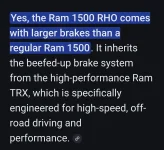

I think RHOfan said mostly the same thing he just worded it differently. You went into a little more detailed perspective. Another point is that opposing piston caliber brakes use both pads equally where as single piston calipers are essentially one pad brakes. The clamping force and heat are not equal on both sides. It’s all just saying the same thing with different supporting information.I respectfully disagree.
Bigger brakes generate heat slower, as well as dissipating heat faster. This allows them to not fade as quickly. This is independent of the type of pad used.
This is solely why big brakes exist, not because they look cool.
Stopping "power" isn't the only thing that matters in braking. In fact, it's almost a non-factor. A set of brakes on any car are usually powerful enough to basically lock up the wheels.
The actual big and extremely important question in braking on a performance vehicle is how many times you can stop/slow down during a certain window before the brakes essentially stop working due to heat (fade).
This is why they're universally used in performance cars, and why no sane person would be caught dead on a race track without a set of them. This isn't done for looks.
A set of big brakes will ABSOLUTELY come in handy on a 6,000lb truck. Aggressively drive these things and the braking power disappears- fast.
Can you run race pad compounds on a set of small brakes to slightly help with fade? Sure, but good luck stopping when they're cold or when it's wet out.
If you drove 2 of the same vehicles back to back, one with standard brakes and one with 6 pistons, the difference in fade would be night and day and very apparent. I've had two cars with them, and I will personally never buy a car (not truck) without big brakes again.
Last edited: